The causes of inflation are:
?
- Demand-pull inflation
- Cost-push inflation
- Imported inflation
- inflationary expectations
- Other causes:
- Government policies
- (e.g. 1: increased GST → increased prices → Cost-push inflation)
- (e.g. 2: increased regulation/protection (Tariffs/Quotas) → higher prices → Cost-push inflation)
- Excessive increases in the money supply
- (a.k.a. ‘monetary inflation’)
- (increases in $ supply at rates faster than economic growth → pushing up prices)
- Government policies
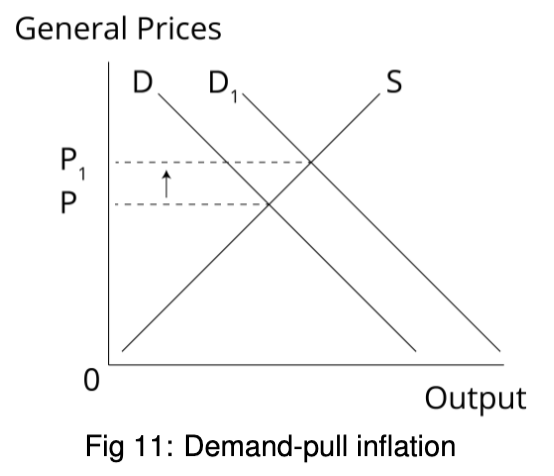
Demand-pull inflation
?
- When demand exceeds the available supply, resources become scarce and ==prices rise in the short-term==.
- caused by any increase in AD.
- can include higher levels of consumer spending and investment
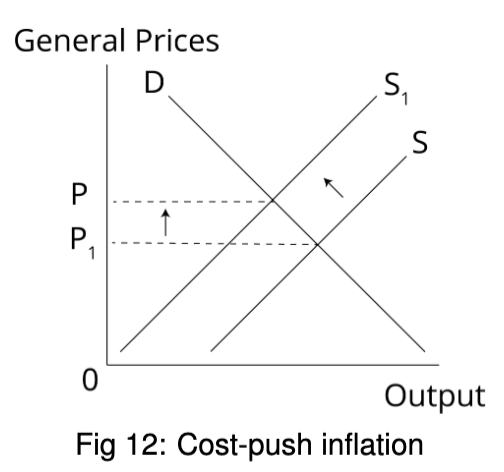
Cost-push inflation
?
-
When production costs increase, firms must also raise prices to cover these costs
- can be caused by increased price of wages, rent, suppliers, or other business inputs
-
-
common cause is ==increased wage pressures==, can cause a cycle of:
- raised prices to cover wage increases
- consumers (who also form the labour market) demanding higher wages to pay for increased cost of living
Imported inflation
?
- Imported inflation is transferred to Australia through international transactions
- an increase in the price of imported goods
(perhaps caused by a depreciation of the AUD)- → Australia pays higher prices for imports
- → flows through to the official (domestic) inflation rate
inflationary expectations
- If individuals expect prices (inflation) to rise in the future, they can act in ways that increase inflation:
?
- consumers increase spending while prices are lower
- → causing Demand-pull inflation
- similarly, firms will increase their prices if demand is expected to rise (for profit) → more inflation
- employees will negotiate wage increases in preparation for future inflation
- → increasing costs of production by firms (Cost-push inflation)