Aggregate supply
-
Aggregate Supply (AS) is
? -
the total productive capacity (income) when all factors of production are fully utilised over a period of time.
-
Defined by the equation: (==AS = C + S + T==)
- Aggregate supply = Consumption + Savings + Taxation
-
Consumption is included in AS
- as it comes from personal income earned
- (is therefore a result of production and supply)
- as it comes from personal income earned
-
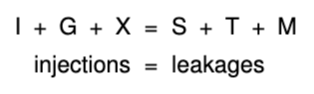
Equilibrium is :: when AD = AS, this is where the quantity of real GDP demanded = the quantity supplied.
- As consumption cancels out from both, we have:
- As consumption cancels out from both, we have:
Increases in Aggregate Supply
-
Aggregate supply can be increased when :: a higher level of output can be produced for the same cost.
- (i.e. increase in quantity or improvement in the quality of the factors of production)
-
The capacity constraint refers to :: the point at which the economy approaches full employment and cannot grow any further.
-
(increases in AS) can be achieved by the changes:
- Population growth
- (more labour)
- Discovery of new resources
- (increased mining exports)
- Workers acquiring new skills
- Increased capital
- (efficient machinery)
- Adoption of new technology
- Measures to improve efficiency
- Government policies
- Population growth