1980s
?
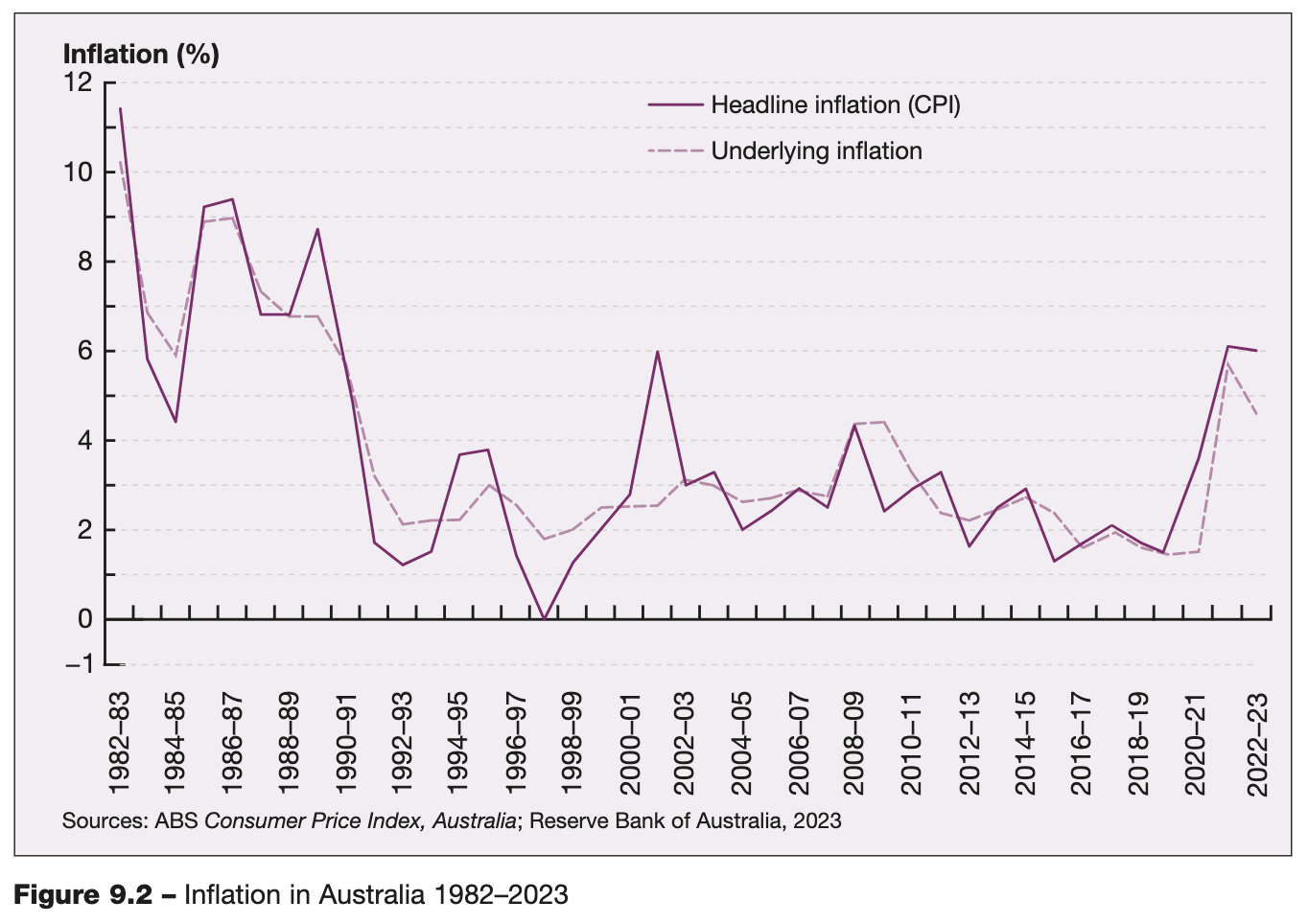
- ==The highest inflation rate was over 11%, in the early 1980s==
- Before Australia experienced microeconomic reform across many industries,
- increasing overall productivity (& efficiency) → lowering price levels.
- Before the recession of the early 1990s
- Before Australia experienced microeconomic reform across many industries,
1990s - present
?
-
Since the early 1990s, Australia has sustained relatively low inflation
- both headline and |underlying rates ==below 3%== (averaged 2.6%)
-
can be attributed to:
- The success of the RBA’s inflation targeting of between 2-3%
- Cuts in protection and the encouragement of free trade
- (microeconomic reform)
- SEE Australia’s policies regarding free trade and protection
- Growth of enterprise bargaining in the labour market containing wage pressures
2000s
?
- The inflation rate reached 4.5% in 2007–2008, because of:
- Higher global prices
- the resources boom
- and unemployment nearing the NAIRU → increasing wage pressures.
- ended with the global downturn in 2008 (reduced consumer confidence)
2020s (covid & Ukraine)
?
-
==inflation rose above 2% to 2.2% (in Q1 2020)==
-
caused mostly by COVID:
- supply chain disruptions → increased global prices → Cost-push inflation
-
- government stimuli → ‘government policies’ inflation
-
TODO eco 9.1, 9.2, 9.3 ⏫ 📅 2024-05-20