- crucial that management has a precise understanding of the business’:
- current position
- a clear picture of where it is heading
SWOT
-
(Strengths, Weaknesses, Opportunities, Threats)
-
SWOT analysis involves :: the identification and analysis of the internal strengths and weaknesses, and the opportunities and threats from the external environment
-
By conducting a SWOT analysis, business are able to:
- gain an indication of their current position in comparison to the rest of their competitors.
- determine strategies to rectify weaknesses and exploit opportunities
-
Internal forces (strengths, weaknesses):
- operate within the business
- can be largely controlled by the business
- are unique to each business
-
external forces (Opportunities, Threats):
- mostly from Influences on marketing
| Helpful: | Harmful: | |
|---|---|---|
| Internal: | Strengths: | Weaknesses |
| External: | Opportunities | Threats |
Product life cycle
-
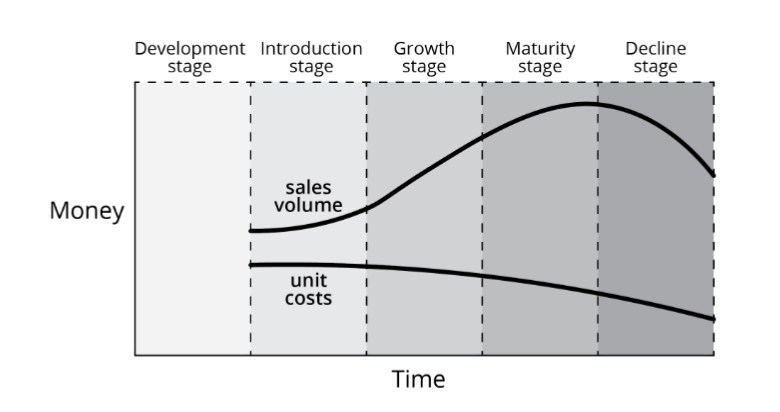
The product life cycle consists of :: the stages a product passes through: introduction, growth, maturity and decline.
-
Many businesses start because of an initial idea to produce a product that is new and perhaps superior to what is available
-
Introduction stage :: business aims to develop customer awareness due to slow sales and growth by setting its prices lower than its competitors.
- tries to increase consumer awareness and build a market share
- price is often noticeably lower than competitors
-
Growth stage :: business experiences an increase in profitability due to the increased demand for products and a more aggressive advertising campaign.
- Brand acceptance and market share are actively pursued by the producers of the product.
- Price per unit of production is maintained as the firm enjoys increased consumer demand and a growing market share.
-
Maturity stage :: business experiences steady profits and sales and continues to advertise their products in attempt to differentiate from its competitors.
- Sales plateau as the market becomes saturated.
- Price may need to be adjusted downwards to hold off competitors and maintain market share.
-
Decline stage :: business profits fall, prices are reduced, and promotion is discontinued.
-
- Sales begin to decline as the business faces several options.
- Price is reduced to sell the remaining stock.
- Additionally, some products decline due to:
- Changing public perceptions on what is fashionable
- The introduction of new leading edge technologies
- New products
- Fluctuations in the level of economic activity
-