- Effective operations management adds value to the business by increasing productivity, reducing costs, and improving quality.
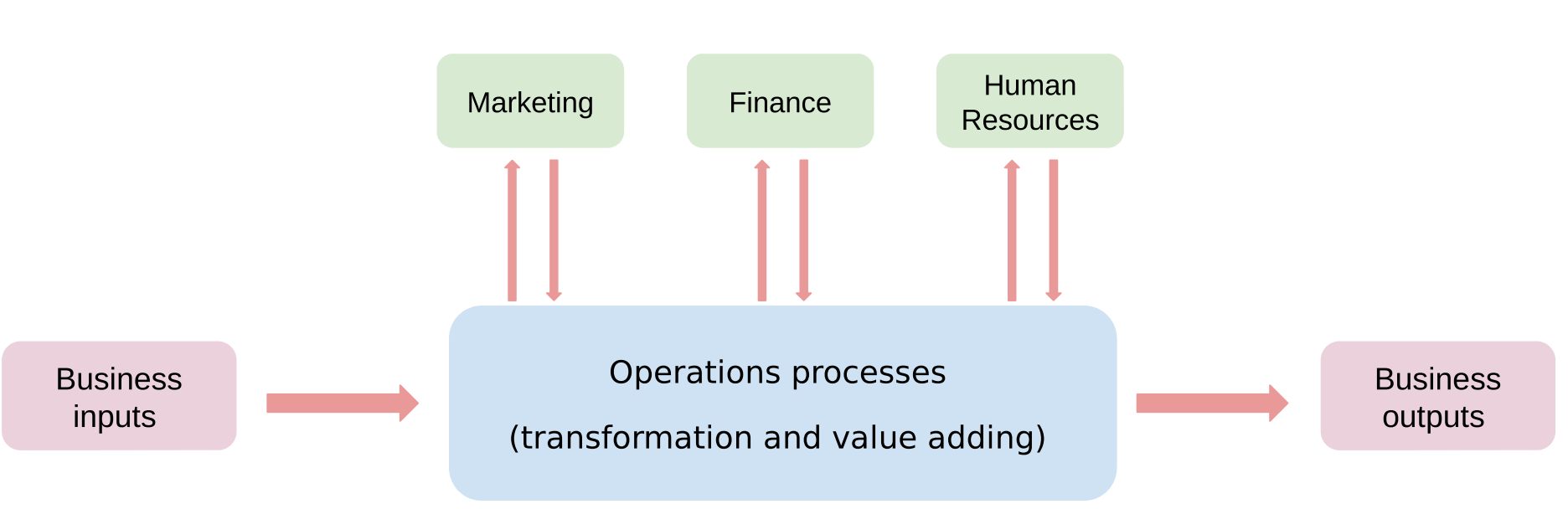
- This is to achieve a strategic competitive advantage through lower costs and/or differentiated goods.
Strategic decisions:
- Strategic refers to the long-term planning performed by senior management.
Features:
Cost leadership: TB 1.2
- Cost leadership :: aiming to have the lowest costs or to be the most price-competitive in the market.
- The business should still be profitable → operations managers need to find ways to minimise costs.
Lean production:
- Lean production :: eliminating waste at every stage of production. to achieve cost-efficient production
Goods/service (product) differentiation:
- distinguishing goods/services from your competitor(s)
- Product differentiation
- e.g. A car having the ‘safest airbags on the market’
Review Questions:
-
Outline the meaning of the term ‘strategic’.
the long-term planning performed by senior management -
Distinguish between a profit centre and a cost centre.
A profit centre refers to an area of production which the business makes a profit. a cost centre is where a business has expenses. -
Outline two benefits of cost leadership.
- having the lowest priced product on the market increases sales
- reduced cost per unit produced, → lower COGs
-
Distinguish between economies of scale and cost leadership. Assess the importance of both for business efficiency.
economies of scale: how a business can reduce expenses from the inputs of production through different means
cost leadership: overall cost-effective production
both allow for the business to sell for cheaper and retain profitability -
Define the term ‘product differentiation’.
To distinguish products from competitor(s) in the same market -
Describe three distinguishing factors differentiating goods and services.
-
price of the good/service
-
overall quality
-
customisation
-
-
Compare how differentiation varies between goods and services.