-
Microeconomic policies are :: government actions that aim to increase aggregate supply by improving the efficiency and productivity of producers and industries
- i.e. cutting protection, labour market reforms
-
addresses structural problems causing Australia’s imbalances (inefficient industries)
-
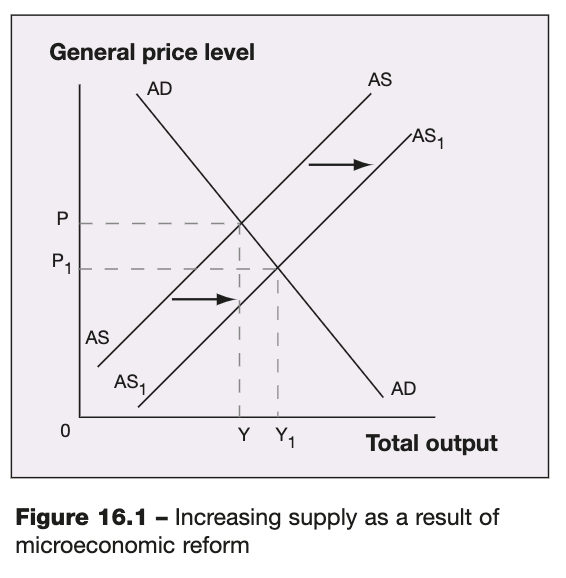
-
Structural change involves :: shifts in the pattern of production that reflect changes in technology, consumer preferences, global competitiveness and other factors. It results in some products, processes and even entire industries disappearing, while others emerge and become more prominent.
Three types of efficiency gains from successful microeconomic policies:
?
- Allocative efficiency
- the ability for the government to allocate resources to the most efficient areas (industries) of the economy
- (e.g. cutting protection from car manufacturers)
- by minimising distortions to the market economy
- the ability for the government to allocate resources to the most efficient areas (industries) of the economy
- Technical efficiency
- the ability for the economy to produce the maximum level of outputs for a given level of inputs
- (lowest opportunity cost)
- the ability for the economy to produce the maximum level of outputs for a given level of inputs
- Dynamic efficiency
- the economy’s ability to shift resources between industries in response to changing patterns of consumer preferences
- (e.g. the use of new technologies and consumer preferences)
- the economy’s ability to shift resources between industries in response to changing patterns of consumer preferences